Thursday, December 18, 2014

A Trip to “Choice Radio Station”

It was the last day of second term government exams, so students and teachers returned home around 1pm. I was excited to go home and read books on Waldorf Education so I could prep for my job interview later that night. I had planned everything out, Mr. "TBU" sir, the English teacher at my host father's school and NELTA focal person for the Gorkha ETAs had agreed to take me to the bazaar on his motorbike and use the Wi-Fi at his language learning institute, where I teach adult English classes three times a week. "We are going to stop at the radio station and do some recording first," he said. Being Nepal, I did not understand what that meant until we showed up at the radio station…

First there was the commercial, Mr. TBU wanted me to record a sentence saying "Hi I'm Emily, welcome to our English language class!" Then there was the "Merry Christmas and Happy New Year!" announcement. I was totally fine with recording these two things, they were in English….but then, I was told I was going to be interviewed ON THE AIR in Nepali. "You want me to do WHAT!?!?!?!?!?" was my initial reaction. Before I got an answer, I was escorted back into the recording booth. I heard the cheery Nepali music in the background, and then the Radio personality man Mr. "K" began talking like a car going a million miles per hour. I understood the Namaskar part, but that was about it. I felt my heart beating quickly, as my hands began to tremble. "Just breathe, just breathe" I told myself, "what's the worst thing that can happen?" So, I just started talking about how much I love my students, school, co-teachers, and host family. I have no idea if I actually answered any of the questions he asked me, but I talked. At the end of the fifteen minute interview, I wanted to run under a desk and hide, but before I could do that, I heard the Radio personality re-recording the questions he asked so that they matched the answers I gave.

This morning when I entered the school, I was greeted by our school's youngest student, a two year old who has been known to get up from her desk and start dancing in the middle of class.
"Miss, miss!!!! You were on the radio! My mother understood your Nepali!" she said with a smile in her high-pitched two-year-old voice. Some of the older students soon gathered around and said things along the lines of "yeah, you spoke such good Nepali and you said you love us on the radio!" My day was officially made when one of the more quiet children came up to me and his peers and said, "Emily miss can speak Nepali and we can speak English now" in a serious, calm, and confident manor.

Some of the once in a lifetime experiences I have had in Nepal, like being interviewed in Nepali on Choice Radio, jumping out of the window of a Nepali bus, and dancing on stage in front of hundreds of people, have helped me gain the confidence to just "go for it." I've been pushed quite far out of my comfort zone, but things have always turned out okay in the end. You never know what you will learn or teach others by trying something new. Although it was a bit scary being interviewed in Nepali, it was worth it because it helped affirm to my students that I really do love them.

Tuesday, December 16, 2014

Question Everything!!!

Questions are an important part of learning through which individuals learn to explore and discover personal identity, interpersonal relationships, and the world. Without questions, there is no opportunity to find answers. Questions are the essence that spark the fire of learning and celebrate the innate curiosity of human nature.

The ability to ask and answer questions both orally and on paper are fundamental skills for English language learners. One day, a student asked me "who old is you?" Instead of simply dismissing the student as being wrong, I decided it was time for them to practice learning how to ask questions. Thus, I designed a unit to help students learn how to answer questions by first practicing how to ask them.

Who? What? When? Where? Why? How? Nepali and English Matching Cards 
We started the unit by exploring the meanings of each of the six question words. I made self-correcting flash card puzzles for each word in English and Nepali, and the students played a matching game finding the correct Nepali word for the English word. (yes, this activity also helped me learn some important Nepali words.)

The way the game works is, you divide the class into two equal teams. Then, put the English cards on one side of the front of the classroom, and put the Nepali words on the other side of the classroom. Have the students stand in two lines, putting students with equal ability levels opposite one another. On the count of "1,2,3 go!" the two students on opposite teams run to match an English question word to the Nepali question word. The first student back with a correct match gets a point for his/her team.

Question Word Comics
I have found comics to be a great way to reinforce concepts with my 2-5th grade students. They call for a degree of creativity, but also show whether or not the students understand the topic being studied. In the comic below, a fifth grade student is drawing pictures to match self-selected questions using the "who, what, when, where, why, and how" words.


Question Word Post-It Game
I LOVE post-it notes. They are also very useful in the classroom for teaching anything that involves categorizations. I started this activity off by writing a series of ten questions on the board. I gave each child a different colored pack of 10 post-it notes. (There are only six students in my 4th grade class, so this was not too much work. I would not, however, recommend this activity for large class sizes). Anyways, I had the students copy ten questions from the board. But, the questions were missing their question words! Throughout the classroom, I taped up pieces of paper with the words "who, what, when, where, why, and how."  Students had to individually put their post-it notes, on the correct question word.

When all the students were finished, we practiced correct pronunciation and intonation when asking the questions. Once the students understood how to ask questions, it was time to begin answering them!


Finding the Answers 
I did a few different activities to help the students begin answering the questions. I started doing this orally. I simply put the students into two lines, one with "questioners" and the other with "answerers" and I had them practice asking and answering questions with one another. After practicing asking and answering the questions orally, I had the students practice writing and answering the questions in a self-created and illustrated mini-book called "My Question Diary." The question diary contained a number of questions such as "what is your name? where do you live? what sports do you enjoy?" I made a list of questions on the board that students could choose from. For their question diary, they had to choose five questions, and write the question and answer in a small mini book that they made from computer paper. Along with writing and answering the questions, they had to provide illustrations.  I was amazed by how beautiful their books turned out! Unfortunately, they took the books home to show their parents and siblings before I could snap a picture, but I guess its a good thing because it shows that they are proud of their work.

I used the "My Questions Diary" as a means of assessing the students written ability to write and answer questions, but I wanted to find a way to also assess the students' oral ability to ask and answer questions...on the final day of the unit, it was game time! I found a really cool game which uses a deck of cards to ask and answer questions.

Talking Cards
Materials required:
One or two packs of playing cards and the questions sheet.
Objectives:
To get the student used to answering general questions at a level that resembles normal speech and to build conversational confidence.
How to play:
You distribute the cards among your students. If you have a large class use two packs of cards. The student answers the corresponding question to that card. The student is awarded 4 points for a complete answer, 3 points for a reasonable answer, 2 points for an incomplete answer, and 1 point for any answer at all. If your class is up to it, you can get them to award the points.
Spades (Describing things)
Ace
Describe your face.
King
Describe your clothes.
Queen
Describe your mother.
Jack
Describe your father.
Ten
Describe an apple.
Nine
Describe your bedroom.
Eight
Describe your best friend.
Seven
Describe what you had for breakfast today.
Six
Describe your English teacher.
Five
Describe the difference between a dog and a cat.
Four
Describe a pencil.
Three
Describe your favorite hobby.
Two
Describe this game.
Hearts (what questions)
Ace
What did you have for dinner last night?
King
What did you have for lunch today?
Queen
What is your favorite sport? Why?
Jack
What did you do last night?
Ten
What type of music do you like? Why?
Nine
What is your favorite game? Why?
Eight
What does your mother do?
Seven
What does your father do?
Six
What is your favorite subject at school? Why?
Five
What did you do last Sunday?
Four
What is your favorite television programme? Why?
Three
What would you do if you could do anything in the world?
Two
What is the one thing you would change about yourself?
Clubs (mixed questions)
Ace
What is your address in English?
King
What time do you usually get up?
Queen
Where did you go for your last holiday?
Jack
Where were you born?
Ten
Why are you studying English?
Nine
Which do you prefer, summer or winter, and why?
Eight
Which magazines do you like to read?
Seven
How many hours do you usually sleep at night?
Six
Do you like shopping? Why?
Five
How often do you go to the cinema?
Four
What was the last movie you saw?
Three
Would you like to travel to other countries? Why?
Two
How many friends have you got and who are they?
Diamonds (if clause)
Ace
If you could have a pet what would it be?
King
If you had a million dollars what would you spend it on?
Queen
If you could meet any person in the world who would it be and why?
Jack
If you could change something about your school what would it be?
Ten
If you had to live in another country which one would you choose?
Nine
If you could do anything in the world what would you do?
Eight
If you could speak three languages well, what would they be?
Seven
If you were rich, what would you do?
Six
If you had to spend a day alone at home, what would you do?
Five
If everyone in the world suddenly disappeared, what would you do?
Four
If you could choose how old you were, how old would you be and why?
Three
If you could choose any meal you wanted, what would it be?
Two

If you found $100,000 what would you do?


If you haven't already inferred this from my posts and pictures, I absolutely love my students. I am amazed by how hardworking they are and am blessed with the opportunity to feed their hunger for learning. Since teaching this unit, my students have been more vocal speaking English outside the classroom, and the skills they learned from it helped bump up their government exam scores. I am very proud of the progress that has been made over the past three months.

Sunday, December 14, 2014

We are Queens and We are Kings!


When teaching class one about the letters "Q" and "K," we embarked on a magical adventure filled with music, movement and song. We learned about the differences between boys and girls, like how we say "she is a queen," and "he is a king." We listened to stories about famous Nepali queens and kings, sang songs, and learned new rhymes (like the one in the video below). Of course, we made crowns in which students practiced writing their names (a big learning goal for all class one students) and created golden rings out of post-it notes. Nothing beats the genuine enthusiasm of Shree Gorkhkali Primary School's youngest learners! 

Circle Time (the first 10-15 minutes of class each day)
The Royal Portrait 

Q for "Queen"


In the video above, students use their bodies to mimic the shape of "K" and "Q" in the kinesthetic movements. The rhyme and rhythm of the chat is helping build their phonemic awareness and speaking fluency. 

Saturday, November 8, 2014

Nature Walk Picnic


Why keep children in the classroom when there is a world of learning outdoors?

This week, the staff of my school decided to take our students on a nature walk picnic to a nearby jungle. Students came with drums, makeshift musical instruments, and organic vegetables to share.

One of the most successful teaching methods I have experienced is taking my young learners on weekly nature walks to local farms, forests, and hills. Children are excited to be outside, explore, and express their curiosity. Not only are nature walks enjoyable, but they are helping my students learn new English vocabulary words in natural contexts. I am amazed by how quickly students are speaking in English about what they see and experience. Only three months ago, many of them could not write their own names. From the walks, I have learned a lot from my students and co-teacher about native Nepali medicinal plants, organic farming, and the many fascinating animals that live in the jungle. Nature walks give my students the confidence to explore, share, and expand their knowledge of the local Environment while practicing English.

Our first whole school nature walk picnic was a big success. I especially enjoyed cooking locally grown organic vegetables with the students, singing traditional Nepali songs, and, of course, dancing.


My First Birthday Abroad


On October 18, 2014 I celebrated my first birthday in a foreign country. Three of the fellow ETAs (Lisa, Ellen, and Alana) came to my house to celebrate with me and my Nepali family. In Nepal, people rarely celebrate birthdays, so it was exciting sharing a taste of home with my Nepali family by throwing a traditional American birthday party. The love that I felt affirmed that Nepal truly has become my second home. I am so grateful to love and be loved by two wonderful families and friends around the world.

My delicious Nepali birthday cake! 

My three ETA friends eat momo's 

Nepali momo's (they are delicious!!!)  
Celebrating with my Nepali family and ETA friends 
P.S. (Thank you to Lisa Rowan for saving Watermelon Sour Patch for the past three months and surprising me with my favorite American candy. My college friends know how much Watermelon Sour Patch mean to me.)

A Trip to the Village (The Day I Climbed out the Window of a Nepali Bus)

Part 1: A "Two Hour" Trip Takes Ten Hours 

There are moments in people's lives that they will always remember--like getting their licence to drive, graduating college, or getting their first apartment. For me, there will always be the day I climbed out the window of a Nepali bus...

It was a special day in Nepal during the heart of Dashain--the largest Nepali festival of the year. My host family woke-up early, put on our most beautiful clothes, and gave one another tika. After eating some delicious food (rice, fresh vegetables, and tea) my host father, host sister, host brother, and I quickly packed our bags to visit our hajuraamaa's (grandmother's) village home. I was told the bus ride would take one to one-and-a-half hours, and then we would need to walk for an additional one to one-and-a-half hours to reach the rural village. Little did we know that we were in for a wild, wild ride. 

My family and I arrived at the bus stop around 12:00 in the afternoon. There were many other families waiting for the bus as well. Because the day was a holiday, most of the bus drivers were at home celebrating with their families. There were very few buses operating. 


So...we waited at the bus stop for four hours until we finally saw an approaching bus. At this time, there were swarms of families ready to push, shove, and pounce to get an empty seat. One woman tossed her infant about 7ft up through the window of the bus so that she could save herself a seat. My American readers are probably familiar with the story about a woman who got trampled to death at Walmart two years ago on Black Friday. I cringed as I saw small children caught between swarms of shoving adults. 


What I am about to describe to you is a claustrophobic's worst nightmare (I am slightly claustrophobic). My host father and brother somehow made it to the front of the crazy crowd and were able to save two seats. My host sister and I were towards the back of the crowd, avoiding the pushing. "Sankalpa, Sarswoti, over here!" my host father called. (*Sarswoti is my Nepali name). My host sister and I stepped onto the jam-packed bus and began forcefully meandering to the back of the bus to our father and brother. I don't know how we made it. "Saugat and I are going to see if we can ride on the top of the bus where they put luggage," my host father said. "You two sit here." By the time we sat down pushing and shoving had settled. There had to be at least 60-70 people on a bus with only 30 seats. The air felt hot, sticky, stale, and unbreathable as choruses of babies cried at the top of their lungs. 


First, I felt something hit my leg. Second, I heard a shrill angry scream. And then, I'm pretty sure I saw a clump of hair go flying. Then, a clump of people fell down like dominoes, clearly revealing two women screaming and fighting. One woman's face was bleeding and the other was trapped on the floor nearly crushing the infant she held in her arms with the weight of her body amid the legs of standing people. (Yes, it was the same infant that was thrown through the window). "Oh my God!" I thought. "Someone needs to stop this!" I was genuinely worried that the baby was going to die.
Just at that moment, another bus pulled into the bus stop. Sankalpa and I heard our father shout "Sankalpa, Sarswoti, come quickly!" We were at the back of the bus and there was no way we would be able to pass through the fighting people. Climbing out the window was the only option. 


"There is no way I am going to jump 7ft out of this window without breaking a limb" I thought. My plight was not a graceful one. I held onto the ledge and attempted to dangle my legs out the small window. It resulted in me doing the splits with one leg dangling. Of course, crowds of people now swarmed to potentially watch me fall. "Jump, jump, jump!" they shouted in Nepali. I let go of the ledge and fell down the side of the bus doing the splits all the way to the ground. To this day, I thank the heavens that no limbs were broken or damaged. 


So, we managed to get good seats on the second bus, but did our good fortune last for long, of course not! After finally leaving the bus stop around 5pm, the driver discovered that they had no gas! Soon, we saw the first bus at the gas station, but buses had no gas and neither did the gas station.  I began to wonder if we would ever reach the village.
The people from both buses walked back to the bus stop carrying their bags. When we arrived, a third bus was waiting for us along with the police who talked with the two women who had fought. I was happy to see that the infant had survived the fight. Once again, people pushed and shoved for seats. My father was able to save four seats at the very back of the bus.


So...it was a bumpy and cramped ride on the winding and dirty road. Because there were so many people, the bus made many stops. Around 9pm we reached our stop! It was pitch black outside, but the stars and the moon were crystal clear.
I will never forget how refreshing it was to breathe the clean and crisp evening air after spending four hours on the stuffy bus. The starlight revealed hills and valleys of lush rice paddies, banana trees, and corn fields. I could hear the quiet rush of a nearby stream and see a faint outline of the crystal-white himalaya on the distant horizon. 


Although some journeys are difficult and require patience,the thrill of arriving at a beautiful destination can make the most arduous of experiences worthwhile. 


Part 2: A Taste of Life in a Rural Nepali Village 


The view from the village

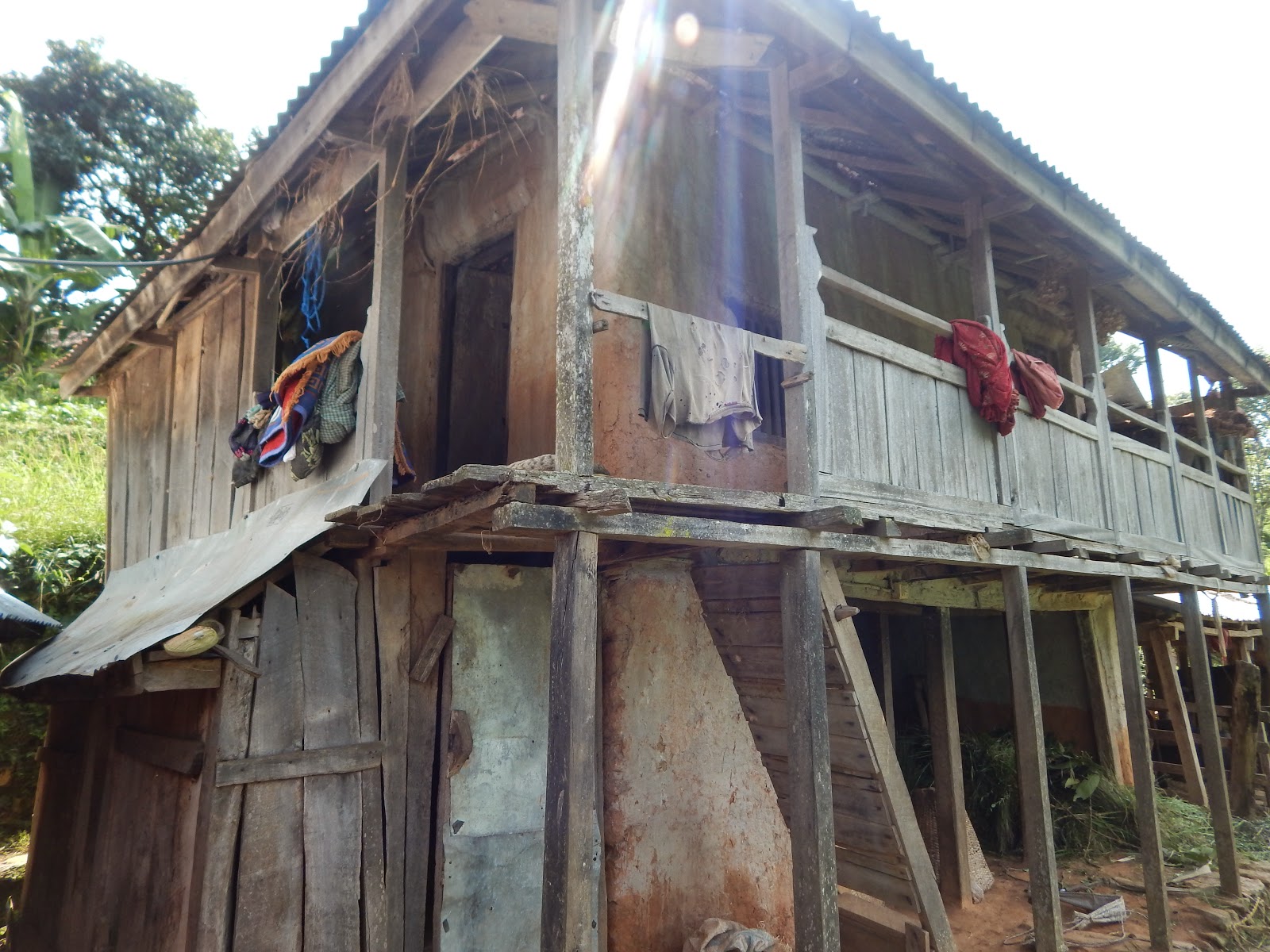
The village house (the first floor is for animals, and the second is for humans)

The second village house (my Nepali sister and brother are on the left)

Family friends in the village
baby goats!
Receiving tika from my Hajuraamaa
My Hajuraamaa (datha china; no teeth) 


My Top 5 Most Embarrassing and Unbelievable Experiences in Nepal

Feeling like a Fool and Loving it!

Living in a foreign country makes me feel like a clueless child at times. From the native perspective, until recently, I've lacked many basic life skills like knowing how to wash my clothes by hand, how to fold my blanket correctly, how to cook tea Nepali style, and how to pronounce basic Nepali words...etc. Instead of feeling frustrated with my apparent "challenges," I think it is important to laugh at them lightheartedly.

5. Winning the "Best Dancer Prize" at Teej 
Never in a million years did I think I would end up dancing on stage in front of a crowd of over 500 people in Nepal; but, that's what happened to me during Teej, a big festival that celebrates women every September. My ten minutes of fame brought my face to local newspapers and TV programs across Gorkha. I have no idea how to dance Nepali style. I'm pretty sure people across the country were laughing at my moves.

Dancing with students at our school Teej program 

My English Co-Teacher Miss Sabitra 

The Nepali dance group that adopted me and forced me to dance on stage
 My Nepali Aamaa is standing on my left above the girl in the purple dress

4. The Exploding White-Board Marker 
One day, my school had a holiday, so my host father invited me to visit his school and teach 10th grade English. Everything was going well until my white-board marker died. When I tried to refill it with ink, of course I did not do it correctly.  The entire bottle of refill ink slipped through my hands and spilled on the floor. The students laughed hysterically. But, at least they probably won't forget me anytime soon. All they'll need to do is look at the gaping black ink stain that will forever remain on their classroom floor.

The marker that I am holding in this picture was the one that exploded 

3. "Do you like Roxy?"
The day before my horrible language flub, my host family and I ate a delicious fruit called boxi. It is a fruit in the citrus family, similar to a grapefruit. I was talking with my Nepali Fulbright focal person, and some of my student's parents when they asked me "do you like roxy? (in Nepali of course). Thinking that they were talking about the delicious citrus fruit, I went on and on about how much I loved roxy, how I had it the day before, and how I wished I could have it everyday. Everyone started laughing and I did not understand why. Then the Nepali focal person said in English, "I guess it is true about American girls liking lots of alcohol. I then had to explain to everyone that I in fact, did not love roxy nor did I wish that I could drink it every day. I thought they were talking about the citrus fruit boxi not roxy, which is the Nepali word for alcohol. It is now a running joke in my village, and when I walk to school many of the people I pass ask me "roxy kane?" (do you want to drink alcohol?). I can't help but laugh when I forcefully reply "HOINA!"  which means "no." #languagelearningproblems

2. Wearing my Kurta  Backwards on my First Day of School 
In Nepal, women wear a type of clothing called kurta surwal. A kurta is like a frock, and surwal are loose fitting pants, On my first day of school, I was so excited, that I put my kurta on backwards and did not notice it. I was surprised no one in my family did either. In my defense the back and the front of that specific kurta look very similar. After meeting my co-teacher she politely said, "Emily miss, I think your kurta  is on backwards." Yes, it was. I had to go into a dark shed to turn it around. Not my idea of a good first impression.

On my second day of school, I was so determined to get the kurta right, that I accidentally put on my surwal backwards. Shortly after arriving at school my co-teacher politely said, "Emily miss, I think your surwal  are backwards." Yes, they were. Let's just say during my first few days of school I spent a lot of time turning my clothes around in the shed.

1. Knocking Over a Motorcycle in Broad Daylight 
My Nepali host father has many friends in the community. One day I was walking to school, and one of his friends offered me a ride on his motorcycle. It was a very hot day, so I was grateful to receive the offer. My father's friend told me to please get on the motorcycle and that he would be back in one minute. He was buying himself a bottle of water. The motorcycle was parked next to a bus stop where about ten people were sitting. I tried getting on the motorcycle, and it felt a bit wobbly. "I should wait," I thought. Of course I didn't wait though. Ambitiously, I mounted the motorcycle only to fall down one second later. The entire motorcycle fell on it's side, crushing my book bag of school materials. "Oops" I said. Suddenly, people started running to see what had made such a loud noise. A circle of Nepali people soon surrounded me. Some were laughing, some were concerned. My father's friend ran over to see what had happened. He picked his motorcycle up, dusted off the dirt, turned to me and said "it's okay, you can walk to school today. You better go now, you don't want to be late."

Note: There is a high probability that this post will be revised with additional unbelievable and embarrassing moments.