Saturday, November 8, 2014

My First Birthday Abroad


On October 18, 2014 I celebrated my first birthday in a foreign country. Three of the fellow ETAs (Lisa, Ellen, and Alana) came to my house to celebrate with me and my Nepali family. In Nepal, people rarely celebrate birthdays, so it was exciting sharing a taste of home with my Nepali family by throwing a traditional American birthday party. The love that I felt affirmed that Nepal truly has become my second home. I am so grateful to love and be loved by two wonderful families and friends around the world.

My delicious Nepali birthday cake! 

My three ETA friends eat momo's 

Nepali momo's (they are delicious!!!)  
Celebrating with my Nepali family and ETA friends 
P.S. (Thank you to Lisa Rowan for saving Watermelon Sour Patch for the past three months and surprising me with my favorite American candy. My college friends know how much Watermelon Sour Patch mean to me.)

A Trip to the Village (The Day I Climbed out the Window of a Nepali Bus)

Part 1: A "Two Hour" Trip Takes Ten Hours 

There are moments in people's lives that they will always remember--like getting their licence to drive, graduating college, or getting their first apartment. For me, there will always be the day I climbed out the window of a Nepali bus...

It was a special day in Nepal during the heart of Dashain--the largest Nepali festival of the year. My host family woke-up early, put on our most beautiful clothes, and gave one another tika. After eating some delicious food (rice, fresh vegetables, and tea) my host father, host sister, host brother, and I quickly packed our bags to visit our hajuraamaa's (grandmother's) village home. I was told the bus ride would take one to one-and-a-half hours, and then we would need to walk for an additional one to one-and-a-half hours to reach the rural village. Little did we know that we were in for a wild, wild ride. 

My family and I arrived at the bus stop around 12:00 in the afternoon. There were many other families waiting for the bus as well. Because the day was a holiday, most of the bus drivers were at home celebrating with their families. There were very few buses operating. 


So...we waited at the bus stop for four hours until we finally saw an approaching bus. At this time, there were swarms of families ready to push, shove, and pounce to get an empty seat. One woman tossed her infant about 7ft up through the window of the bus so that she could save herself a seat. My American readers are probably familiar with the story about a woman who got trampled to death at Walmart two years ago on Black Friday. I cringed as I saw small children caught between swarms of shoving adults. 


What I am about to describe to you is a claustrophobic's worst nightmare (I am slightly claustrophobic). My host father and brother somehow made it to the front of the crazy crowd and were able to save two seats. My host sister and I were towards the back of the crowd, avoiding the pushing. "Sankalpa, Sarswoti, over here!" my host father called. (*Sarswoti is my Nepali name). My host sister and I stepped onto the jam-packed bus and began forcefully meandering to the back of the bus to our father and brother. I don't know how we made it. "Saugat and I are going to see if we can ride on the top of the bus where they put luggage," my host father said. "You two sit here." By the time we sat down pushing and shoving had settled. There had to be at least 60-70 people on a bus with only 30 seats. The air felt hot, sticky, stale, and unbreathable as choruses of babies cried at the top of their lungs. 


First, I felt something hit my leg. Second, I heard a shrill angry scream. And then, I'm pretty sure I saw a clump of hair go flying. Then, a clump of people fell down like dominoes, clearly revealing two women screaming and fighting. One woman's face was bleeding and the other was trapped on the floor nearly crushing the infant she held in her arms with the weight of her body amid the legs of standing people. (Yes, it was the same infant that was thrown through the window). "Oh my God!" I thought. "Someone needs to stop this!" I was genuinely worried that the baby was going to die.
Just at that moment, another bus pulled into the bus stop. Sankalpa and I heard our father shout "Sankalpa, Sarswoti, come quickly!" We were at the back of the bus and there was no way we would be able to pass through the fighting people. Climbing out the window was the only option. 


"There is no way I am going to jump 7ft out of this window without breaking a limb" I thought. My plight was not a graceful one. I held onto the ledge and attempted to dangle my legs out the small window. It resulted in me doing the splits with one leg dangling. Of course, crowds of people now swarmed to potentially watch me fall. "Jump, jump, jump!" they shouted in Nepali. I let go of the ledge and fell down the side of the bus doing the splits all the way to the ground. To this day, I thank the heavens that no limbs were broken or damaged. 


So, we managed to get good seats on the second bus, but did our good fortune last for long, of course not! After finally leaving the bus stop around 5pm, the driver discovered that they had no gas! Soon, we saw the first bus at the gas station, but buses had no gas and neither did the gas station.  I began to wonder if we would ever reach the village.
The people from both buses walked back to the bus stop carrying their bags. When we arrived, a third bus was waiting for us along with the police who talked with the two women who had fought. I was happy to see that the infant had survived the fight. Once again, people pushed and shoved for seats. My father was able to save four seats at the very back of the bus.


So...it was a bumpy and cramped ride on the winding and dirty road. Because there were so many people, the bus made many stops. Around 9pm we reached our stop! It was pitch black outside, but the stars and the moon were crystal clear.
I will never forget how refreshing it was to breathe the clean and crisp evening air after spending four hours on the stuffy bus. The starlight revealed hills and valleys of lush rice paddies, banana trees, and corn fields. I could hear the quiet rush of a nearby stream and see a faint outline of the crystal-white himalaya on the distant horizon. 


Although some journeys are difficult and require patience,the thrill of arriving at a beautiful destination can make the most arduous of experiences worthwhile. 


Part 2: A Taste of Life in a Rural Nepali Village 


The view from the village

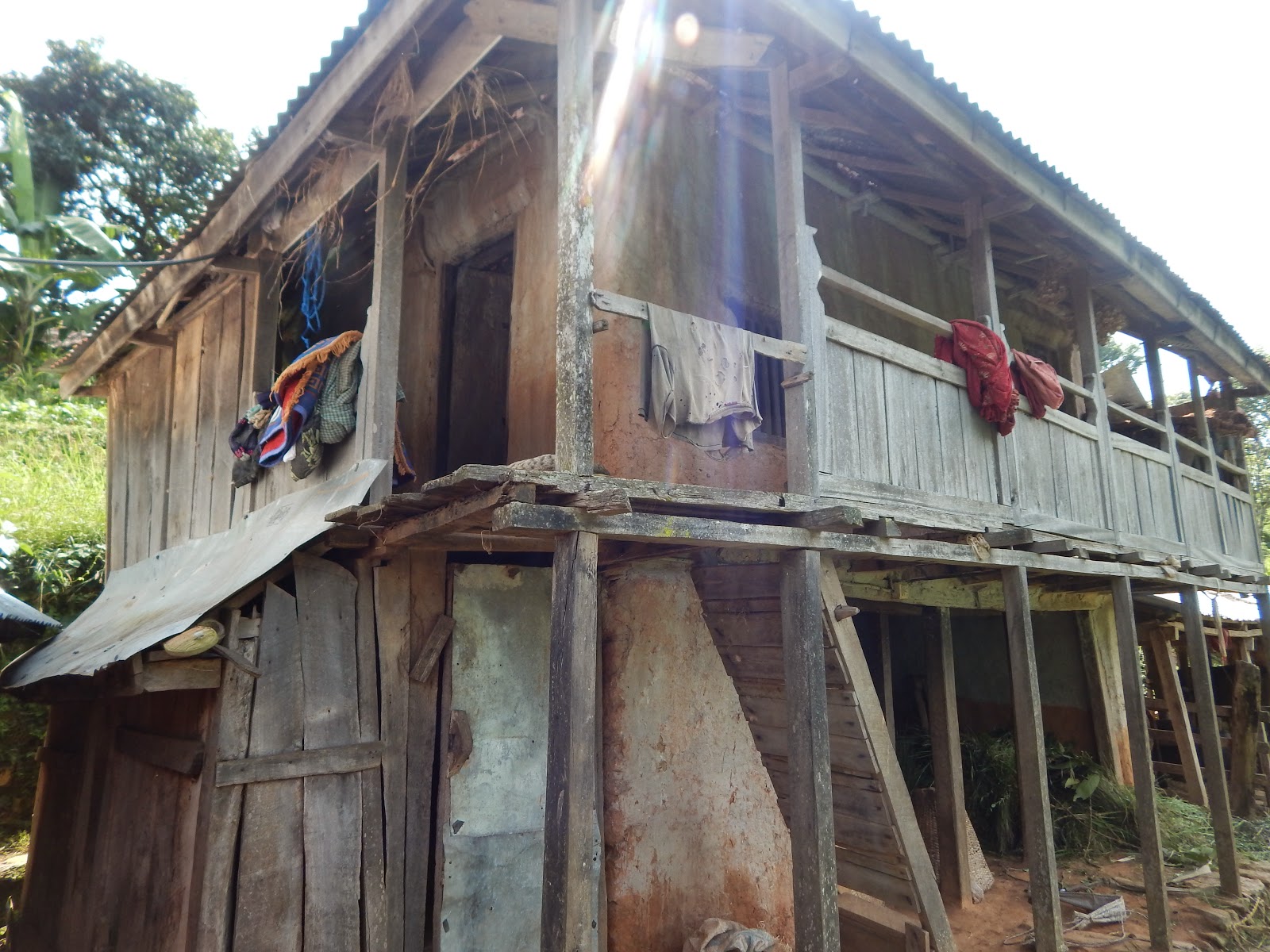
The village house (the first floor is for animals, and the second is for humans)

The second village house (my Nepali sister and brother are on the left)

Family friends in the village
baby goats!
Receiving tika from my Hajuraamaa
My Hajuraamaa (datha china; no teeth) 


My Top 5 Most Embarrassing and Unbelievable Experiences in Nepal

Feeling like a Fool and Loving it!

Living in a foreign country makes me feel like a clueless child at times. From the native perspective, until recently, I've lacked many basic life skills like knowing how to wash my clothes by hand, how to fold my blanket correctly, how to cook tea Nepali style, and how to pronounce basic Nepali words...etc. Instead of feeling frustrated with my apparent "challenges," I think it is important to laugh at them lightheartedly.

5. Winning the "Best Dancer Prize" at Teej 
Never in a million years did I think I would end up dancing on stage in front of a crowd of over 500 people in Nepal; but, that's what happened to me during Teej, a big festival that celebrates women every September. My ten minutes of fame brought my face to local newspapers and TV programs across Gorkha. I have no idea how to dance Nepali style. I'm pretty sure people across the country were laughing at my moves.

Dancing with students at our school Teej program 

My English Co-Teacher Miss Sabitra 

The Nepali dance group that adopted me and forced me to dance on stage
 My Nepali Aamaa is standing on my left above the girl in the purple dress

4. The Exploding White-Board Marker 
One day, my school had a holiday, so my host father invited me to visit his school and teach 10th grade English. Everything was going well until my white-board marker died. When I tried to refill it with ink, of course I did not do it correctly.  The entire bottle of refill ink slipped through my hands and spilled on the floor. The students laughed hysterically. But, at least they probably won't forget me anytime soon. All they'll need to do is look at the gaping black ink stain that will forever remain on their classroom floor.

The marker that I am holding in this picture was the one that exploded 

3. "Do you like Roxy?"
The day before my horrible language flub, my host family and I ate a delicious fruit called boxi. It is a fruit in the citrus family, similar to a grapefruit. I was talking with my Nepali Fulbright focal person, and some of my student's parents when they asked me "do you like roxy? (in Nepali of course). Thinking that they were talking about the delicious citrus fruit, I went on and on about how much I loved roxy, how I had it the day before, and how I wished I could have it everyday. Everyone started laughing and I did not understand why. Then the Nepali focal person said in English, "I guess it is true about American girls liking lots of alcohol. I then had to explain to everyone that I in fact, did not love roxy nor did I wish that I could drink it every day. I thought they were talking about the citrus fruit boxi not roxy, which is the Nepali word for alcohol. It is now a running joke in my village, and when I walk to school many of the people I pass ask me "roxy kane?" (do you want to drink alcohol?). I can't help but laugh when I forcefully reply "HOINA!"  which means "no." #languagelearningproblems

2. Wearing my Kurta  Backwards on my First Day of School 
In Nepal, women wear a type of clothing called kurta surwal. A kurta is like a frock, and surwal are loose fitting pants, On my first day of school, I was so excited, that I put my kurta on backwards and did not notice it. I was surprised no one in my family did either. In my defense the back and the front of that specific kurta look very similar. After meeting my co-teacher she politely said, "Emily miss, I think your kurta  is on backwards." Yes, it was. I had to go into a dark shed to turn it around. Not my idea of a good first impression.

On my second day of school, I was so determined to get the kurta right, that I accidentally put on my surwal backwards. Shortly after arriving at school my co-teacher politely said, "Emily miss, I think your surwal  are backwards." Yes, they were. Let's just say during my first few days of school I spent a lot of time turning my clothes around in the shed.

1. Knocking Over a Motorcycle in Broad Daylight 
My Nepali host father has many friends in the community. One day I was walking to school, and one of his friends offered me a ride on his motorcycle. It was a very hot day, so I was grateful to receive the offer. My father's friend told me to please get on the motorcycle and that he would be back in one minute. He was buying himself a bottle of water. The motorcycle was parked next to a bus stop where about ten people were sitting. I tried getting on the motorcycle, and it felt a bit wobbly. "I should wait," I thought. Of course I didn't wait though. Ambitiously, I mounted the motorcycle only to fall down one second later. The entire motorcycle fell on it's side, crushing my book bag of school materials. "Oops" I said. Suddenly, people started running to see what had made such a loud noise. A circle of Nepali people soon surrounded me. Some were laughing, some were concerned. My father's friend ran over to see what had happened. He picked his motorcycle up, dusted off the dirt, turned to me and said "it's okay, you can walk to school today. You better go now, you don't want to be late."

Note: There is a high probability that this post will be revised with additional unbelievable and embarrassing moments. 

Friday, September 26, 2014

Class One is So Much Fun!

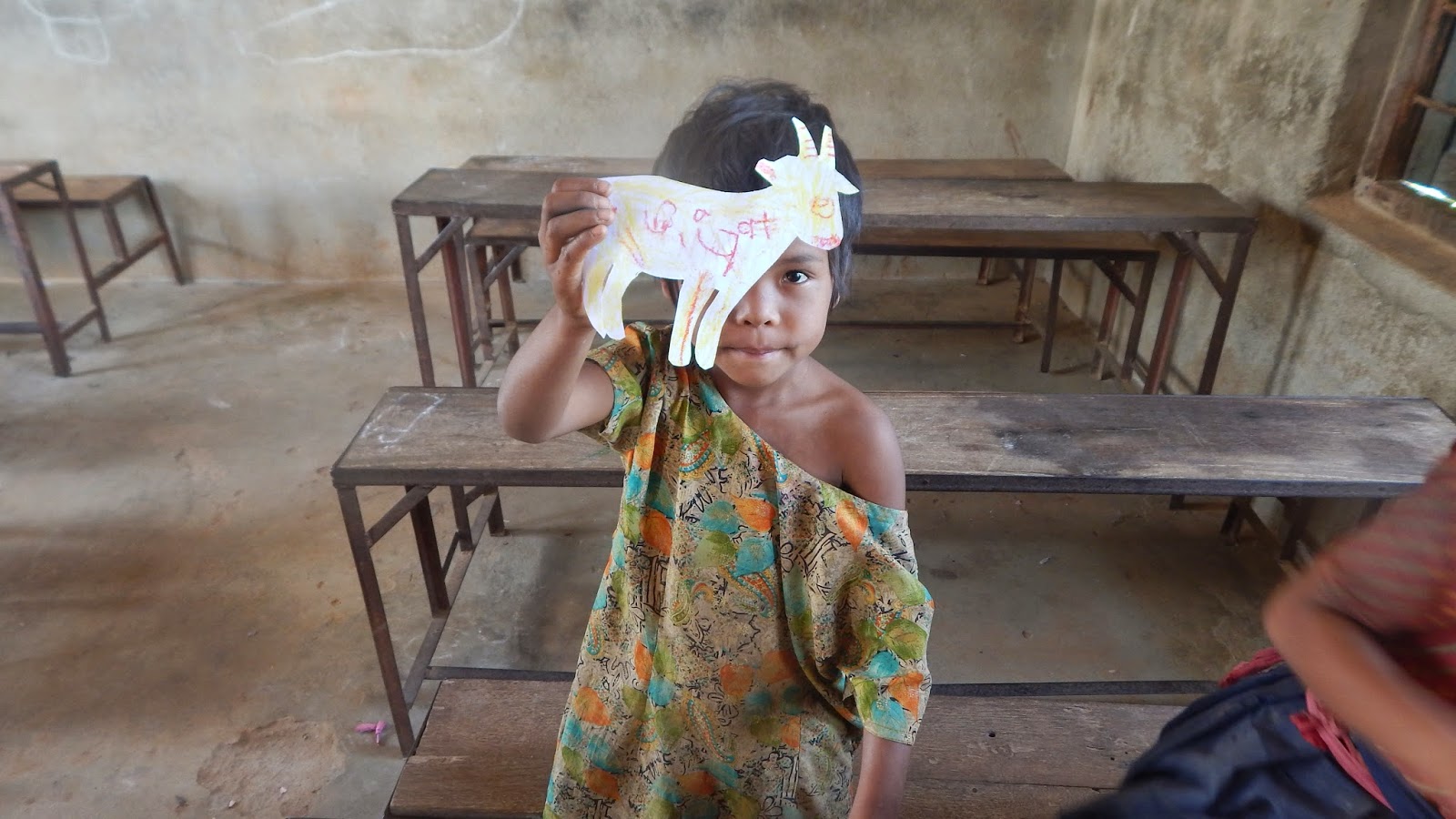
Welcome to my first grade classroom. My school combined the kindergarten and class one because of low student numbers. The class consists of students ages 3-6. Below, you can get a peek of my hand-made teaching materials and my wonderful students in action. It's amazing how quickly they are learning. Teaching them is a joy!


Verb Tenses through All Senses

Welcome to my classroom. It’s an exciting place. Recently, I have been teaching verb tenses to my fourth and fifth grade students. During my teacher training in the United States, I learned about different learning styles. While some students learn best auditorally, others learn best kenesthetically, musically, pictorially, or in other ways. In Nepal, most teachers teach straight from the textbook lecture-style. Students do not get many opportunities to get up and active in class. So, when teaching my students about verb tenses, I decided to do it from a multi-sensory approach.

Games: Kinesthetic and Auditory 
I created two different games for teaching verb tenses. The first game is good as a pre-assessment or introductory game, and the second game is good for review after tenses have been studied in class. 

Game #1: Verb Tense Hot Lava 
 My classroom has a concrete floor, so I can draw on it with chalk. Don't worry, I erase it      afterwards. On the floor, I drew three rows, past, present, and future like below. Then I would say a sentence like "Yesterday, I ran to school," Today, I run to school," or "Tomorrow I will run to school." I would have all of the students stand below the first line of the chart. Then, they would jump into the correct tense. The last student to jump into the correct tense was out. The students enjoyed this game very much. The winner got a free pencil, which increased motivation to learn. This game was also helpful because students got to see other students jump into the correct tense.

Future

Present

Past


Game #2:  Ring the Bell 
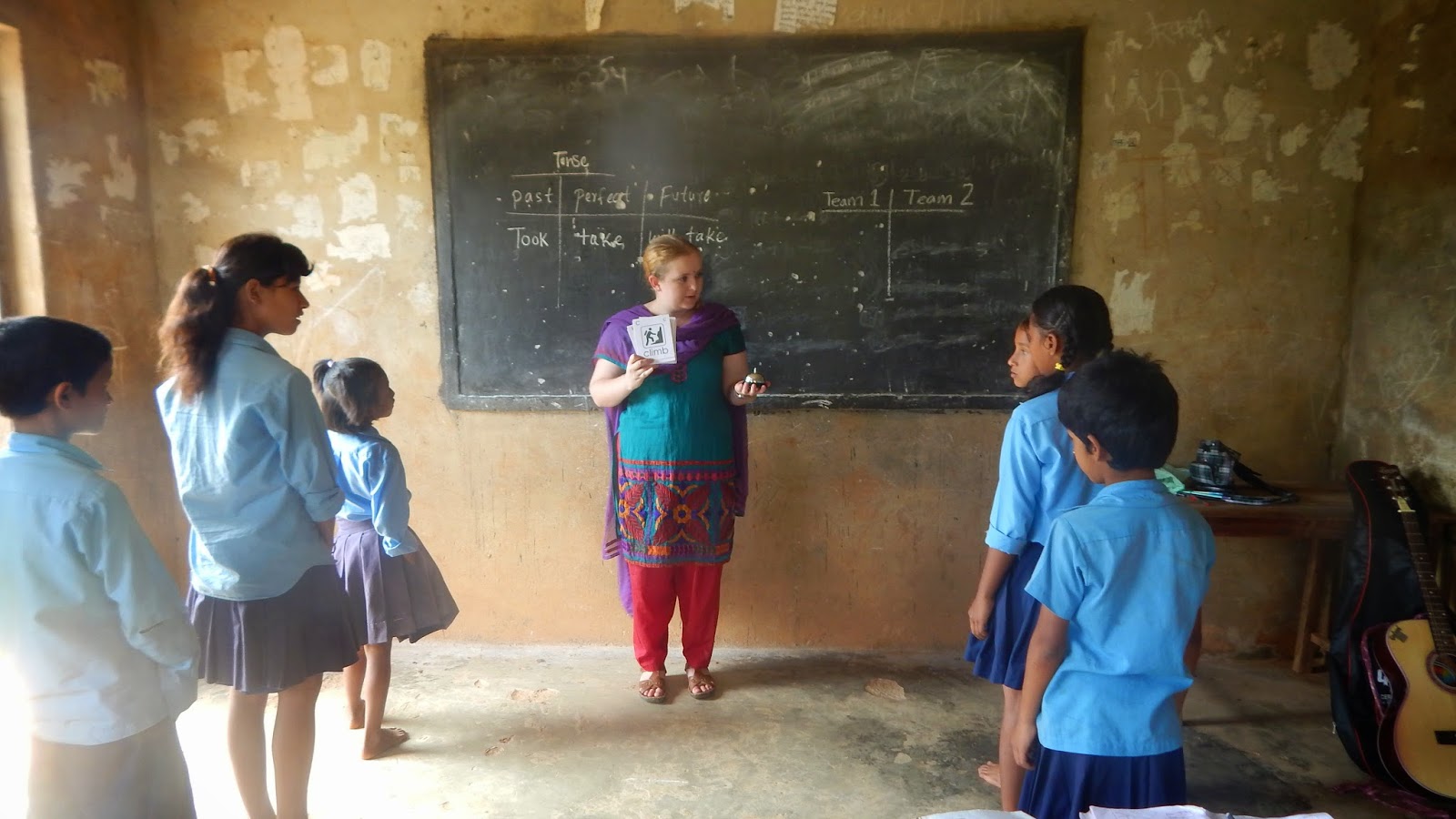
I had my students in both class four and five play this game. First, I split the students into two even heterogeneous groups and had them stand in two lines, across from a student of the same ability level. I stood at the front of the lines holding a bell, and a verb flashcard. I then would say a full sentence like "past tense...Yesterday, I                 to school." while I held up the verb flashcard "to run."The first student to ring the bell and say the sentence correctly won a point for his or her team. The students enjoyed this game very much. 


Verb Tenses Comics 
 I had my students create verb tense comics. Check out the pictures below!


The Verb Tense Song 
Last but not least, I brought my guitar to school, and taught my class the verb tense song. Check it out below. 


In addition to writing sentences, reading explanations from the textbook, and listening to stories in the past tense, my students have made so much progress this week! I am very proud of their hard work. 

Thursday, September 25, 2014

Teach Love; it's the Most Important Thing in the World to Learn


When I first met my wonderful first grade students they did not speak English. This video comes to show that a little love can go a long way.

Monday, September 8, 2014

Bridging the Language Gap

Over the past few days, my students have been taking exams in all subject areas. The results have been disheartening. Today, I watched a five-year-old boy in class two stare at his exam for two hours. Tears welled-up in his eyes when I slowly asked him "what is your name? Write your name here" in both English and Nepali again and again. He could not write his name in either language. The expression on his face is frozen in my mind. I recently discovered that my school is "English Medium" for grades one through four, meaning that the language of instruction in all subjects, except Nepali, should be taught in English. Only one out of the five teachers at my school can hold a conversation in English. The result of this curricular design is dampening the students' ability to speak, read, and write in both Nepali and English. The extent of the student's English consists of "How are you today, I am fine," and "My name is ______." As I sat in class two today proctoring the English exam, I was bombarded by students asking me endless questions about each section of the exam ---ten loud voices shouting all at once "miss, miss miss!" I could not understand most of what they said because my Nepali is very limited. Another teacher heard their loud voices and came to help me. She patiently explained each question to the students in Nepali. She asked the students each question in Nepali. She showed the students what plurals are. She showed the students how to fill in the missing letters. She even said the names of some of the letters in both English and Nepali, and many still did not understand. Part of me wonders how we can really know what the students know after such practices, but part of me already knows the answer---no teacher wants to collect a class-full of empty pages. Today was a wake-up call.

Every day I walk to school, and am greeted by the friendly "Namastes" and "Namaskars" of my students. I wish I could sit down with them and talk for hours about their lives and dreams. The language gap between us is as wide as the distance between Nepal and the United States—but at least our smiles are bi-lingual.

Today, I realized that I will not succeed at teaching English in my school without the support of my fellow teachers. If they want their school to teach through the English Medium, we need to create a community of learners that are surrounded by the English language on a daily basis. The students will not be comfortable and confident speaking English until all the teachers are.

I realize it is not the teachers' fault that they do not speak English. Many of the teachers at my school have been teaching for decades, and know how to teach well—they engage the learners, know the content material of instruction, and care deeply for the wellbeing and success of each child. "I used to be proud of my teaching," the social studies teacher said to me in Nepali. She has been teaching for over thirty years. When she taught in Nepali, her students understood—achievement and a mutual sense of accomplishment between the students and the teacher was present. One day, the decision was made to change the language of instruction to English, as my teacher trainer in Nepal puts it, a "more international language." No one checked to see if the teachers could actually speak English before implementation. No support or resources were given to help teachers learn English. "What can I do?" the social studies teacher asks. What can she do? The day the curriculum switched to English Medium, she, and other teachers were expected to wake-up, go to school, and suddenly be fluent in English. Thus, the vicious cycle began.

From talking with teachers, members of my host family, and members of NELTA (Nepali English Language Teachers Association), I have learned that the small government "supported" primary school where I teach is just one of many schools throughout Nepal, and the Gorkha region, experiencing the same challenges. So, what can I do?—or more importantly what can we do? And by we, I mean the teachers at my Nepali primary school, members of NELTA, my fellow Fulbright ETAs from America, and anyone who cares about helping the children of Nepal learn. Significant progress regarding these challenges cannot be made by a single individual on a large scale. The foundation of a good education begins with exceptional teachers—teachers that are well-trained, well-read regarding best teaching practices, well-versed and knowledgeable in their content fields, and fluent in the language of instruction. I have found that if teachers in more rural areas of Nepal want to learn English themselves, there are few resources aside from bi-lingual dictionaries to aid them in this challenging task. To help my students, and other students at similar schools, I will begin teaching a class next week for primary school teachers in the Gorkha area who want to improve their English speaking, listening, reading, and writing skills. This class community will also serve as a forum for discussing the successes and challenges of teaching in primary schools across Gorkha. The class will be free of charge, and will meet once a week on Saturday mornings. The five teachers at my school will come, and I hope to have at least five to fifteen teachers from other schools join us as well. I feel that teaching this class is one of the best things I can do to help the students indirectly. I think the teachers will be able to learn a great deal of English in the seven months that we will learn together, and perhaps even gain the confidence they deserve to successfully teach in English. I believe that together, we teachers from Nepal and the United States can bridge the language-learning gap.

I think I have discovered my true career calling! I want to start a program/organization that brings exceptional teachers from the United States to countries that are struggling to implement English Medium instruction in government schools. From my research, I have learned that this is a common challenge in many developing countries. The American teachers would travel to the country of their choice during summer vacation and provide free English classes to ESL teachers abroad. In the coming months, I will talk with the wonderful director of Fulbright Nepal about this idea. Who knows where it will go.